Contact Us

Use the form on the right to contact us.

You can edit the text in this area, and change where the contact form on the right submits to, by entering edit mode using the modes on the bottom right. 

180 Varick Street, Suite 1514
New York, NY, 10014

2126279121

News

Vanessa Keith Interview in A People’s Climate Plan for New York City?

Deen Sharp

Architect and UR author, Vanessa Keith, was interviewed as part of Climate Action Lab’s ‘living document’, A People’s Climate Plan for New York City?:

It crystallizes a year-long series of workshops with activists, researchers, and artists intended to reimagine climate politics through the lens of the city as both the frontline impact zone and the source of grassroots alternatives informed by the imperatives of climate justice, eco-socialism, and decolonization.

Inspired in particular by Aurash Khawarzad's Upper Manhattan Project (which in turn has its roots in the 2015 WE ACT for Environmental Justice's Northern Manhattan Climate Action Plan), this pamphlet aims to promote ongoing conversation, organizing, and speculation about popular climate planning at a city-wide scale beyond the important yet limited version of the Green New Deal that has been recently adopted by the city with the Climate Mobilization Act.

Read the full document and give feedback!

A People’s Climate Plan for New York City? Released September 20, 2019 by Verso.

A People’s Climate Plan for New York City? Released September 20, 2019 by Verso.

DSC00060-1024x683.jpg

Earlier this year, Vanessa Keith, author of 2100: A Dystopian Utopia - The City After Climate Change gave a lunchtime lecture at CUNY Climate Action Lab (CAL). The event, organized by Ashley Dawson and Zeynep Oguz, brought together “activists, researchers, and artists to reimagine climate politics through the lens of the city as both the frontline impact-zone and the potential source of grassroots, artistic, and scientific alternatives informed by the principles of climate justice, for A People’s Plan for Climate Action for NYC”.

Watch videos of the day long event, which included UR authors, Vanessa Keith and Tom Angotti, on the Center for the Humanities - CUNY website.

"It's good to see that the onset of rapid global warming is nudging creative minds into action. Job one is to make sure we prevent as much change as possible, but that which we can no longer prevent will require us to adapt, and here are some provocative plans to stir your imagination!" — Bill McKibben, author of Deep Economy: The Wealth of Communities and the Durable Future

Kongjian Yu in IFLA World Congress

Deen Sharp

LETTERS TO THE LEADERS OF CHINA: KONGJIAN YU AND THE FUTURE OF THE CHINESE CITYEdited by TerreformWith contributions by Ai Weiwei, Thomas J. Campanella, Zhongjie Lin, Xuefei Ren, Peter G. Rowe, Michael Sorkin, Daniel Sui, Julie Sze, and Kongjian Yu

LETTERS TO THE LEADERS OF CHINA: KONGJIAN YU AND THE FUTURE OF THE CHINESE CITY

Edited by Terreform

With contributions by Ai Weiwei, Thomas J. Campanella, Zhongjie Lin, Xuefei Ren, Peter G. Rowe, Michael Sorkin, Daniel Sui, Julie Sze, and Kongjian Yu

Kongjian Yu will be presenting Letters to the Leaders of China at the IFLA World Congress 2019 (International Federation of Landscape Architects), Breakout Session 1.6 — Literature Cafe / Wednesday, September 18. Torghjørnet  17:30 - 19:00.

The session will be moderated by Annemarie Lund, Landscape Architect, Editor-in-Chief Emerita LANDSKAB, Denmark

He joins book presenters:

Marc Treib, University of California, Berkeley, United States: Doing Almost Nothing. The Landscapes of Georges Descombes (2018) / Pietro Procinai and the Landscape of Modernism (2017) / Austere Gardens (2016).

Gareth Doherty, Harvard University Graduate School of Design, United States: Paradoxes of Green (2017) / Is Landscape…? (2015)

Martin Prominski / Hille Seggern, Leibniz University Hannover, Germany: Design Research for Urban Landscapes. Theories and Methods (2019).

Bianca Maria Rinaldi / Puay Yok Tan, University of Torino, Italy: Urban Landscapes in High-Density Cities, Parks, Streetscapes, Ecosystems (2019).

Jenny Osuldsen, NMBU/Snøhetta, Norway: Outdoor Voices (Outdoor Matters) (2019).

Anne Katrine Geelmuyden / Marius Fiskevold, Sweco Norge AS, Norway: Arcadia Updated (2018)

Karsten Jørgensen, NMBU, Norway: Teaching Landscape 1 + 2 (2019) / Defining Landscape Democracy (2018)

fd65f0ab0b9f478f9be661fed57e338c.png

Kongjian Yu will also be be speaking at IFLA Breakout Session 2.12 Eastern Perspectives —Common Ground in China and Japan:

As rapid urbanisation in Asia alters the landscape, so does our relationship with the landscape change, offering up new opportunities but also dislocation of communities from the land. These effects are exacerbated by climate change and an increased reliance on technology to make our cities liveable.

This session illustrates the importance of landscape architecture in managing change. It explores the importance of people to place and the relationships between communities and natural systems and processes. Faced with the post-industrial transformation of manufacturing it examines how people and communities can transform post-industrial inner city brownfield’s sites to realise new communities and dynamic places.

The session will be moderated by James Hayter, IFLA president. Other speakers include Bin Li, Research Fellow, The Oslo School Of Architecture And Design; Xia Liu, Graduate, Tongji University; Binyi Liu, Professor, Tongji University; Ni Yan, First Author, Beijing Forestry University; Hiroe Yoshida, Principal Architect
3--lab; Yichen Zhu, Tongji University. Programme here.

Deen Sharp in Public Books

Terreform

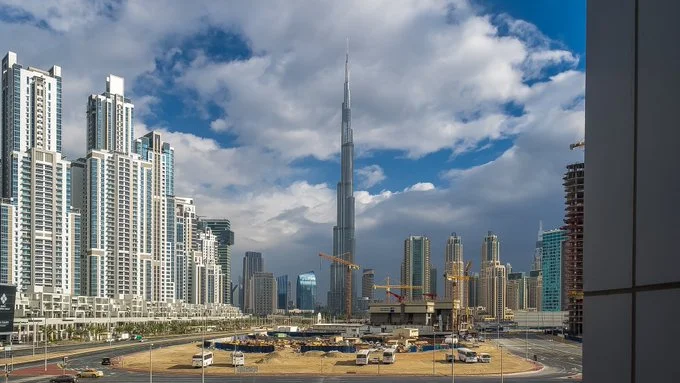
Terreform co-director, Deen Sharp, in Public Books, “The World the Gulf has Built.”

Despite the fragility of the alliance, the term “GCC” is often utilized to discuss these six countries together, because of their shared historical geography; cultural and religious mores; governance structures (characterized by authoritarian monarchies and highly personalized rule); large migrant worker population; rapid urbanization; and vast revenues generated from oil and gas. It is all too easy to focus on everything that is exceptional about the GCC—the record-breaking towers and shopping malls, the three-hundred-island real estate archipelago trying to replicate the world. But this reasoning does much to cover up the GCC’s ordinariness, its multiple connections to everyday lives around the world.

How exceptional can a region that produces so much of the energy that powers contemporary capitalism be?

“It’s long past time that observers of the GCC undo their view of the region as exceptional and recognize it as the global power broker it has become.”